


The Glashütte Original 70s collection isn’t nostalgia masquerading as design. It’s defiance. In an age of constant connectivity, mechanical watchmaking feels almost subversive. These watches make a deliberate choice about what time should feel like. They reject the frictionless, the algorithmic, the endlessly scrollable. Instead, they offer something heavier: objects that demand attention and reward patience.
Glashütte Original’s most personal statement in years. Three models. Each inspired by a decade defined by mechanical resistance: vinyl records, tube amplifiers, analogue speakers. The company didn’t pick these references accidentally.
Design Resistance

Good design doesn’t apologise. It doesn’t try to be everything at once, and it certainly doesn’t chase every passing trend. The 70s collection demonstrates this principle clearly.
When Glashütte Original looked back to the 1970s, they weren’t chasing retro appeal. They were identifying a moment when mechanical objects still dominated. Vinyl played music. Amplifiers shaped sound. Speakers existed as pieces of furniture, not hidden away. Technology was visible, tactile, present.
That sensibility informs every detail here. These watches wear deliberately. The cases are slightly oversized at 39 × 39 mm. The height sits at 9.6 mm. The proportions recall instruments rather than jewellery. They sit on the wrist like objects that do something, not simply adornments that hang there.
The Three Models
Each watch in the collection tells a story through its design language. All three shares the same Manufacture Calibre 36, with its extraordinary 100-hour power reserve. But each model creates a different conversation between past and present.
Vinyl Record
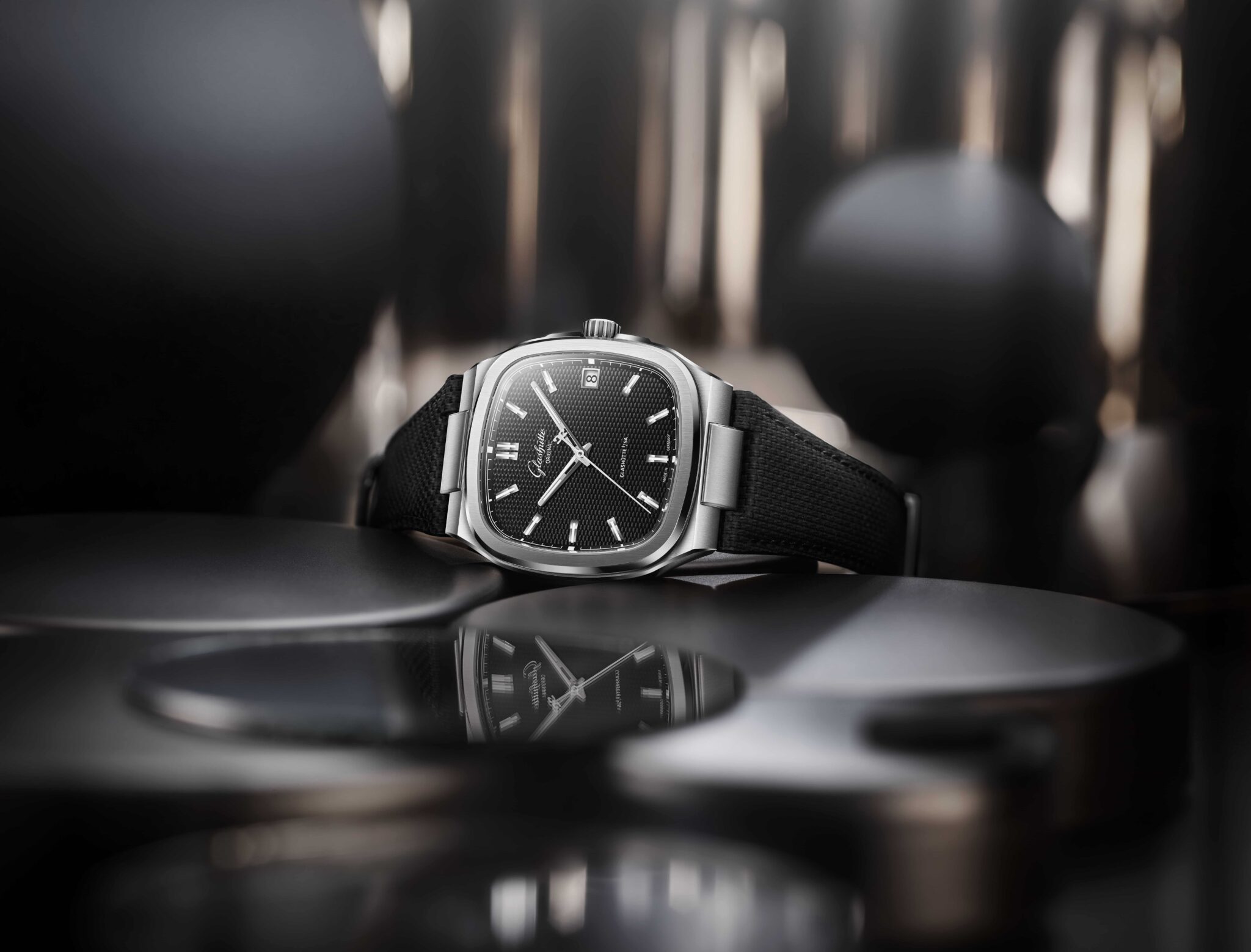
The Vinyl Record model works with rubber straps lined in calfskin, directly quoting the tactile experience of handling vinyl. The dial echoes the concentric grooves you’d find on an actual record. It’s understated but precise. Available in white gold, red gold, or steel. The design whispers rather than shouts.
Tweed Amp
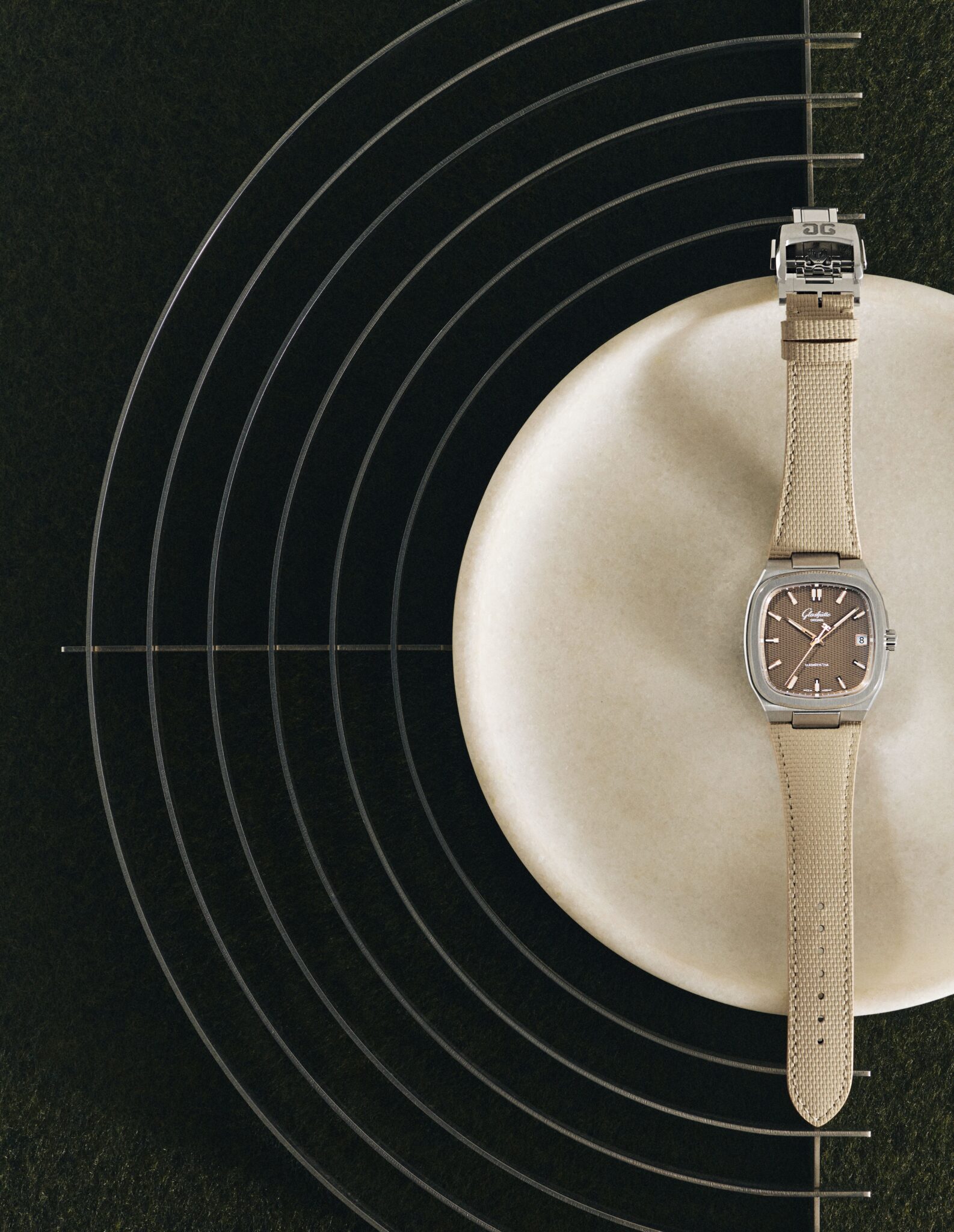
Where Vinyl Record is quiet, the Tweed Amp model channels the warmth of vintage audio equipment. The texture on the dial references the woven fabric found on speaker cones. It’s present without being loud. The design intention is clear, but it never becomes costume. This is design thinking, not theme-park nostalgia.
Stereo Panel
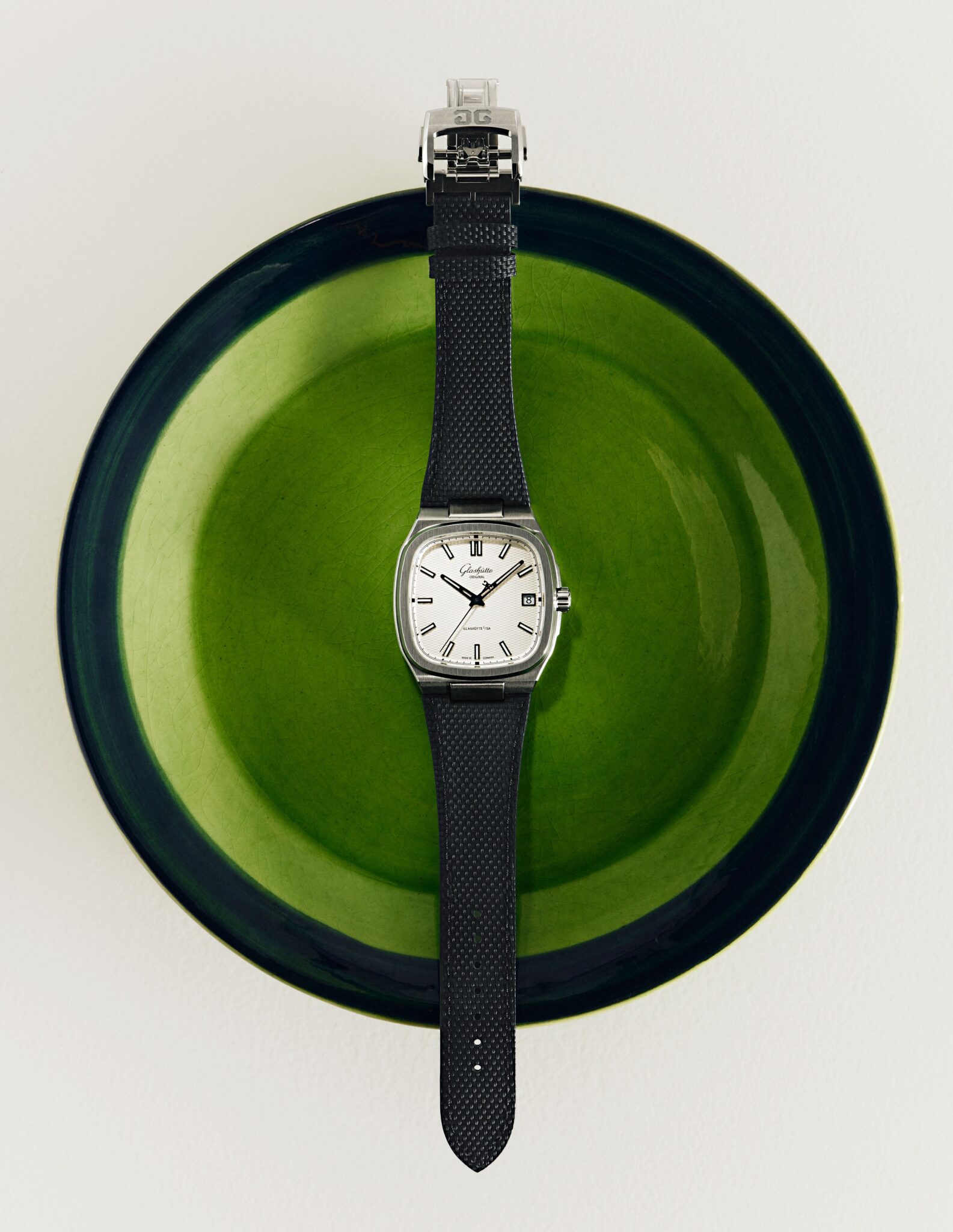
The Stereo Panel model moves from the tactile into the visual. Its dial design evokes the LED displays and mechanical elements found on 1970s stereo systems. It’s the most geometric of the three, with cleaner lines and stronger visual contrast. Still refined, still legible, but with slightly more attitude.
Restraint as Craftsmanship

All three models share an engineering feature called the Groove Lock System. It’s not marketed heavily. It’s simply how Glashütte Original secures the caseback to protect against dust and moisture at 10 bar water resistance.
This detail exemplifies what separates these watches from their competitors. The company could have made these watches smaller, lighter, more convenient. Instead, they chose restraint. They chose details that matter to the person wearing them, not the person selling them.
The 100-hour power reserve is the same story. A conventional movement might manage 48 hours. This goes twice that distance. If you wind it on a Monday and travel Thursday, it’ll still be running on Friday. It’s practical engineering that also becomes philosophical. This watch doesn’t need constant attention. It can sit in a drawer for days and keep time.
Why This Matters Now
We’re told constantly that the future belongs to the digital, the connected, the optimised. Wearable technology, smartwatches, everything networked. And yet, the most interesting conversation in horology right now isn’t about features. It’s about refusal.
The 70s collection represents a deliberate choice. These watches work precisely because they do only one thing: they keep time. They don’t track steps or buzz with notifications. They don’t connect to your phone or measure sleep patterns. In 2026, that simplicity reads as radical.
Design thinking begins with understanding what something is for. Then it means cutting everything else away. The Glashütte Original 70s collection gets this completely right. Each model knows what it is. Each one commits fully to that identity. That commitment matters when you’re spending this much money. You’re not buying features. You’re buying perspective.
Glashütte Original: Clarity on the Wrist
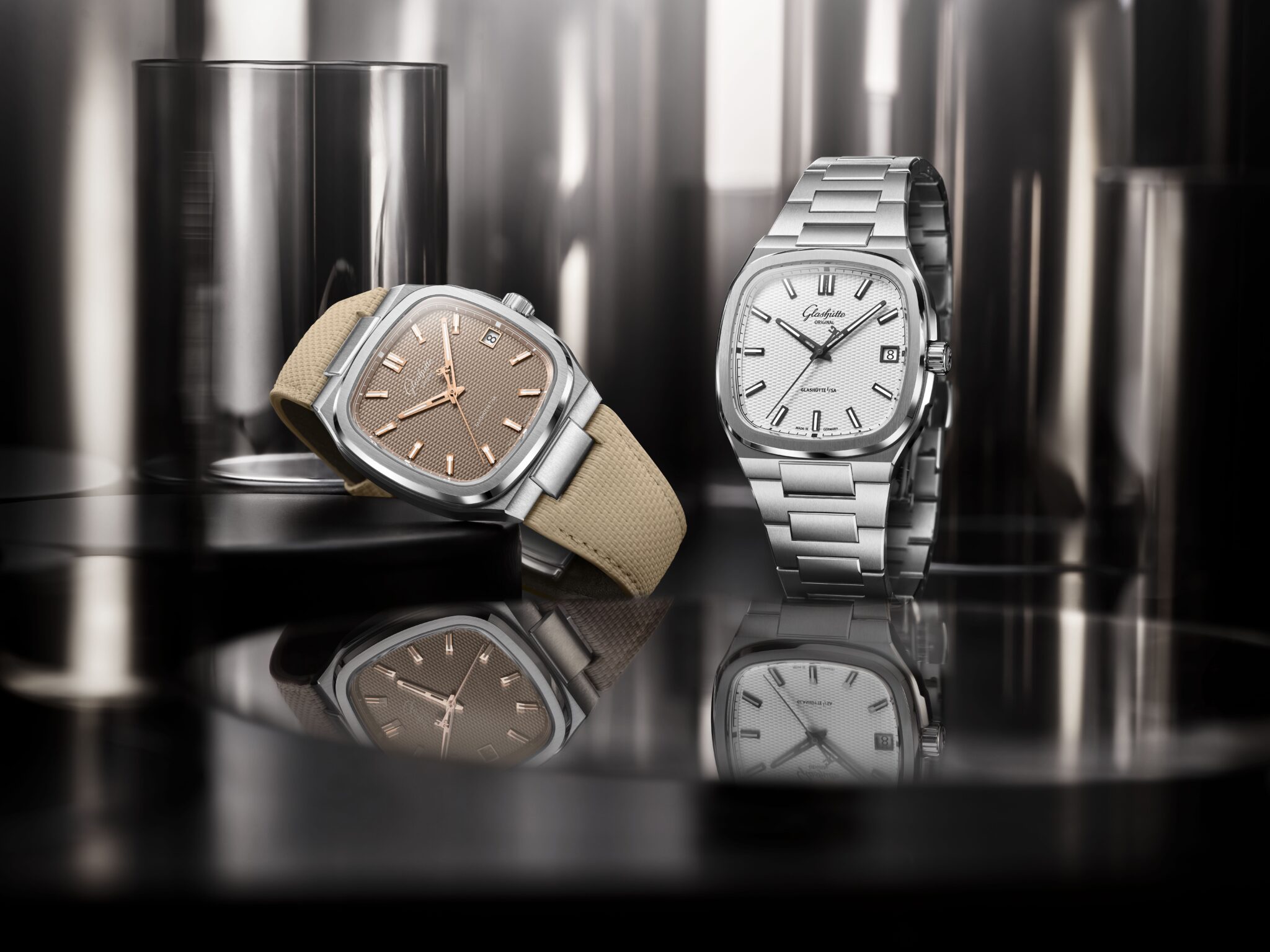
These are watches for people who understand that design is about choice. Not adding more. Taking away everything that doesn’t matter. That kind of clarity is almost defiant.
For more information about the Glashütte Original 70s collection, visit the official Glashütte Original website.
Foto in header: Glashütte Original



