

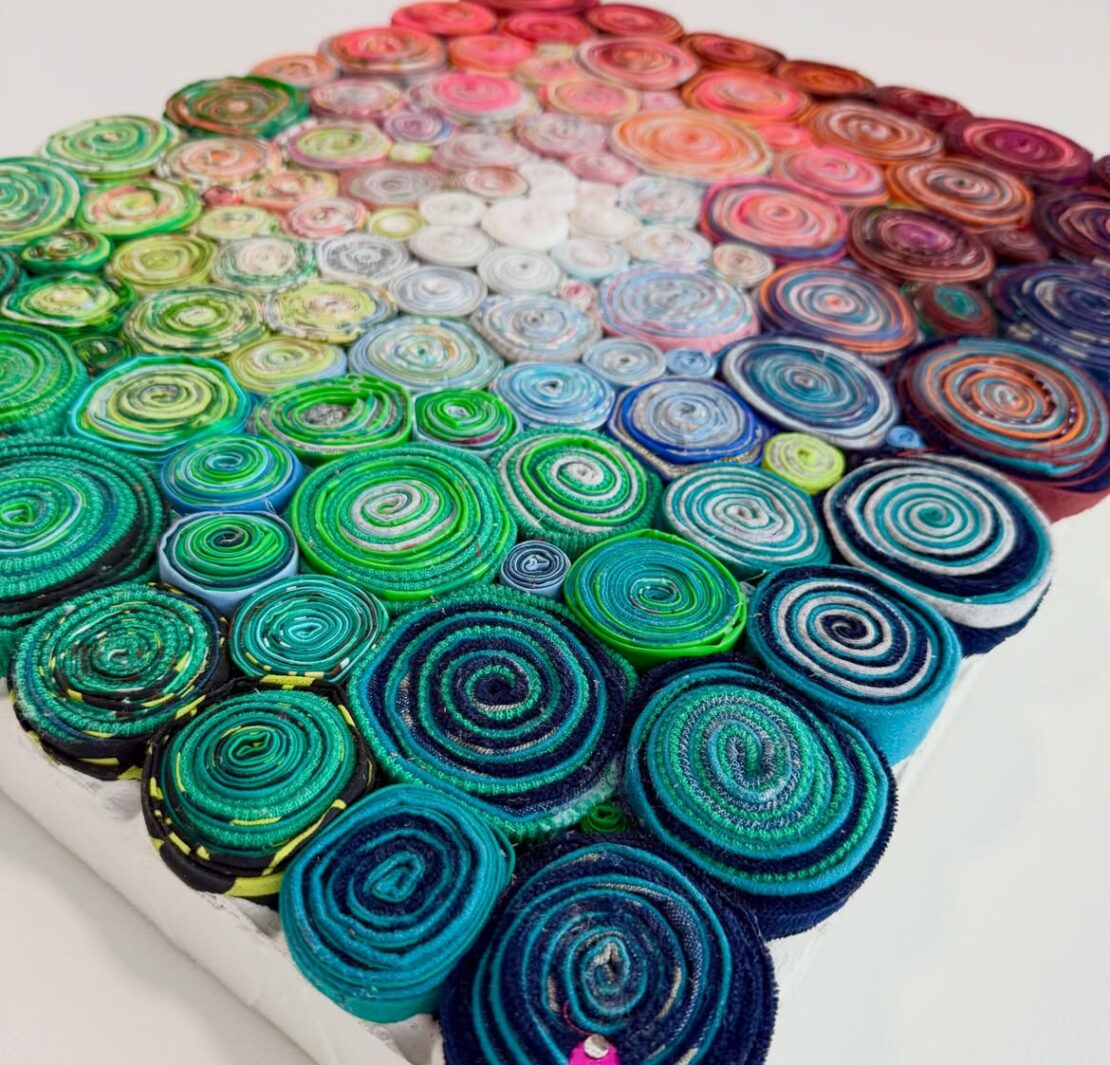
A former City solicitor turned mosaicist, Francesca Busca builds every piece from waste, hairdresser’s foils, bottle caps, fruit nets, discarded fishing gear, and calls the result her “trashure.” The premise sounds like a gimmick. In her hands, it isn’t.
Francesca Busca, the Artist Using Waste as Prime Material
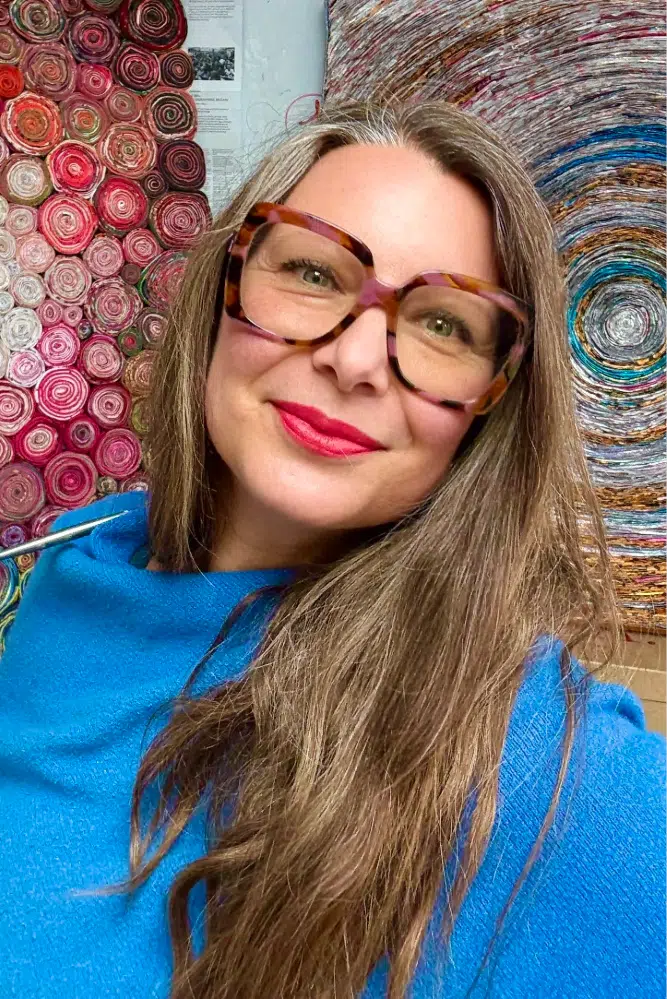
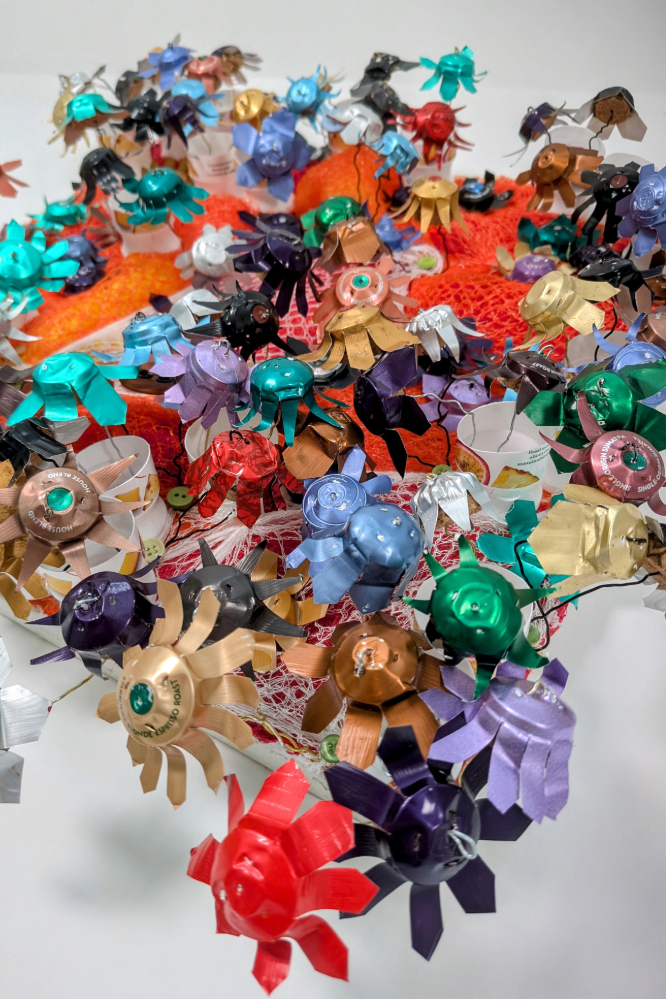
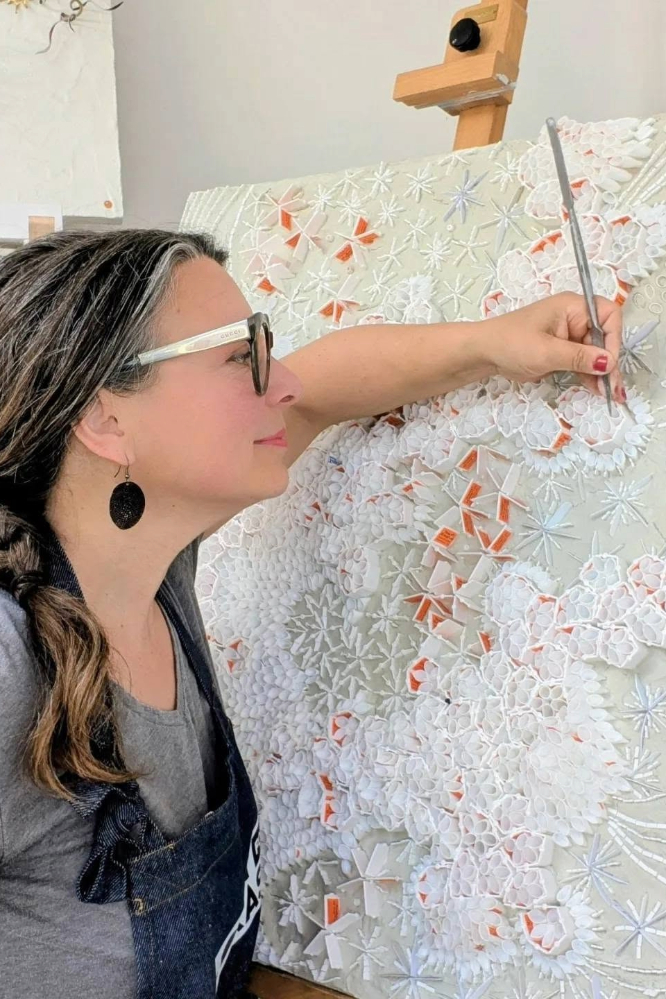
Busca trained at the London School of Mosaic, graduating with distinction in 2019, and that background shows in everything she makes. Mosaic is a discipline of small, deliberate pieces building toward one image, and waste turns out to be a natural fit for it. A thousand ring pulls, a year’s worth of coffee pods, hundreds of foils saved from a hairdresser’s floor: each fragment becomes a tessera, placed with the same care a traditional mosaicist would give marble or glass.
She calls her process ArtWORKivism, and the name is doing real work. This isn’t found-object art loosely gesturing at a message. Busca treats waste as prime material, not a substitute for it, and every piece carries the ethical and logistical weight of however long it took to gather. Some works take years. Nothing gets rushed to make a point.
A Practice Built on Series
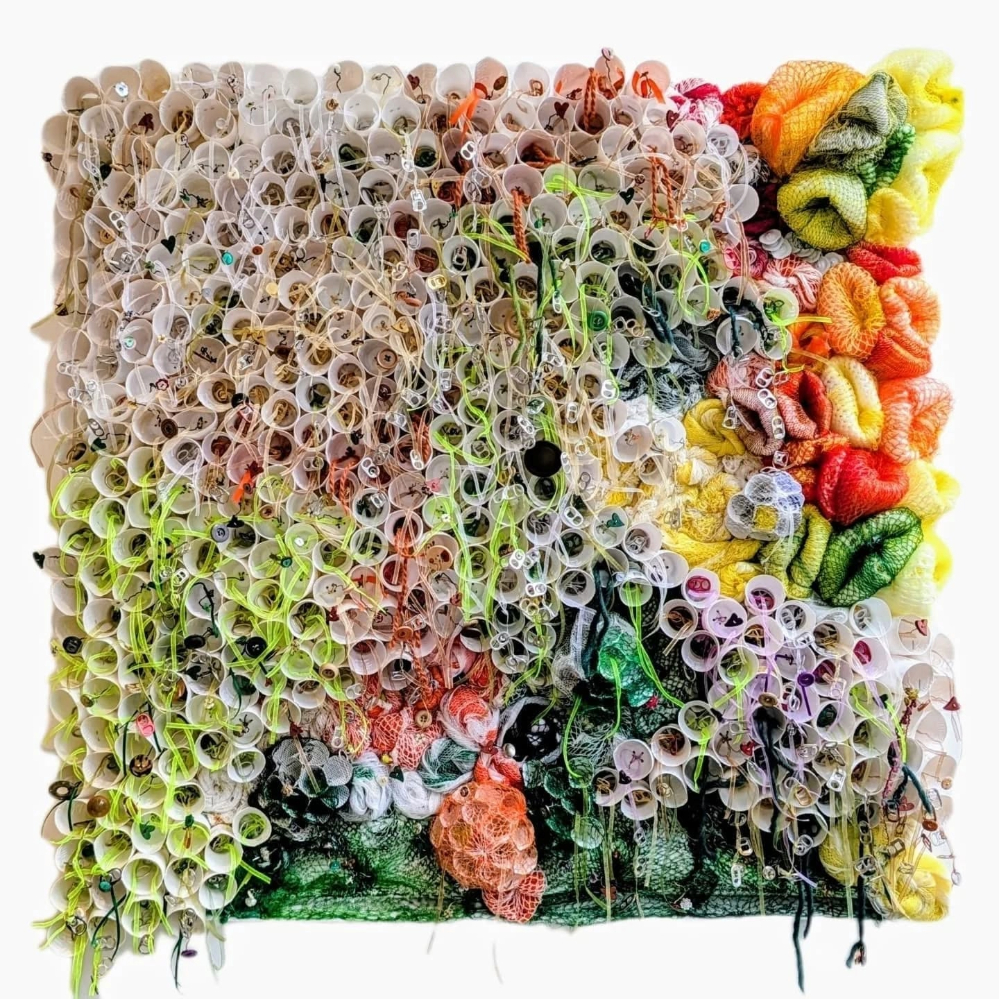
Busca rarely makes one piece and moves on. Her work comes in extended bodies of work, each built around a specific waste stream and a specific idea. The Maremnants series turns ghost gear recovered from Scottish waters into seascapes and shoreline textures, made through her work with marine conservation initiatives that pull discarded fishing rope out of the sea. The Characters reimagines portraiture entirely from reclaimed fabric and paper, abstract figures built in circles rather than straight lines, each one a small argument for fluidity over conformity. Metafauna and Paraflornalia turn coffee pods, yoghurt bottles and fruit nets into coral reefs and seagrass meadows, beautiful enough to make you forget, for a second, what they’re actually made of.
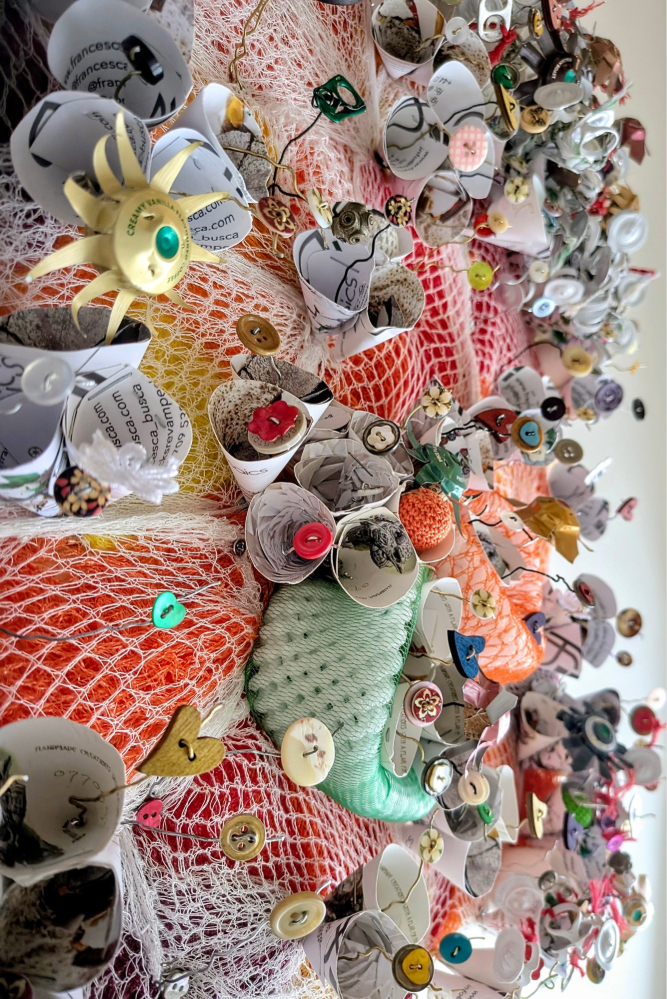
That’s deliberate. Busca wants the beauty to do the persuading. Her pieces on veganism and animal agriculture, or the works built from discarded rescue dinghies referencing displacement and asylum, don’t lead with the statistics. They lead with color, pattern, craft, and let the material’s origin catch up with the viewer after the fact.
The Bigger Picture
Busca’s practice extends well past the studio. She founded ArtforTrash, a commission format where clients’ own waste becomes the raw material for a bespoke piece, and Payment in Kind(ness), which accepts eco-friendly actions in place of a fee. She’s also behind GREENy bastARTs, an international collective of artists working on environmental causes. Alongside the art, she lectures, has exhibited in more than a hundred venues internationally, and has spent stretches collaborating with marine science institutes, most recently around waste recovered from Venice’s lagoon and the Scottish coast.
None of it reads as a side project. The commissions, the collective, the teaching: it’s all the same argument made in different formats, that what gets thrown away still has value, and that the right hands can prove it.
A Different Kind of Treasure
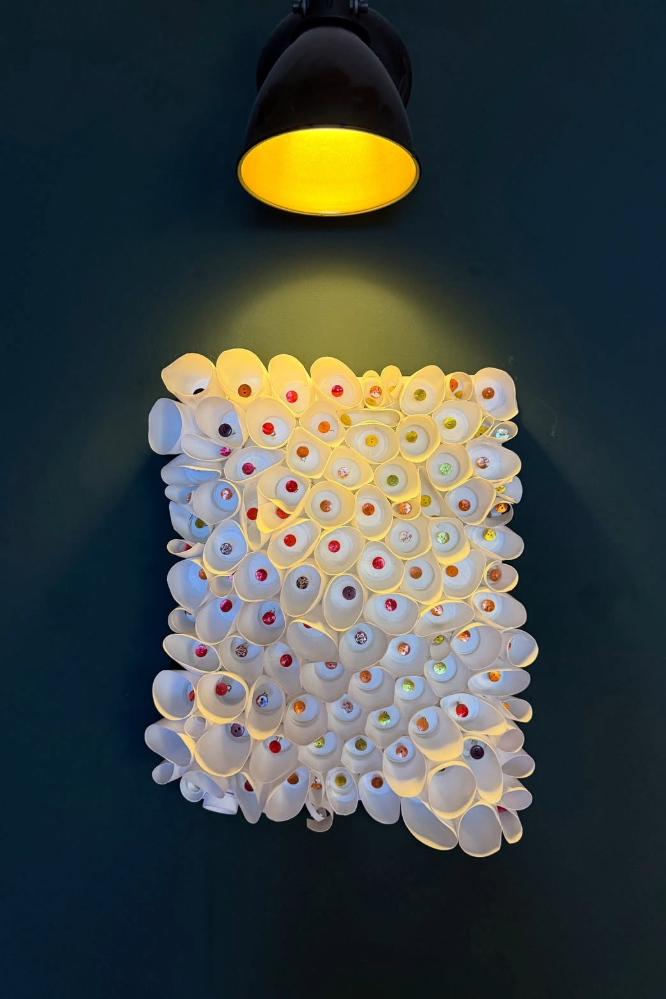
What makes Busca’s work land isn’t just the concept. It’s the discipline underneath it. Anyone can glue bottle caps to a board and call it commentary. Building a coherent seascape out of a thousand of them, tessera by tessera, with a mosaicist’s eye for how each piece relates to the next, is a different order of craft entirely.
Her material never fully disappears into the image, and that’s the point. You can still tell a ring pull is a ring pull. Busca isn’t asking you to forget what you’re looking at. She’s asking you to look at it differently, and by the time you’ve noticed the coffee pods, you’ve probably already decided the piece is beautiful.
Follow Francesca’s work at francescabusca.art and on Instagram at @art_for_trash.



