

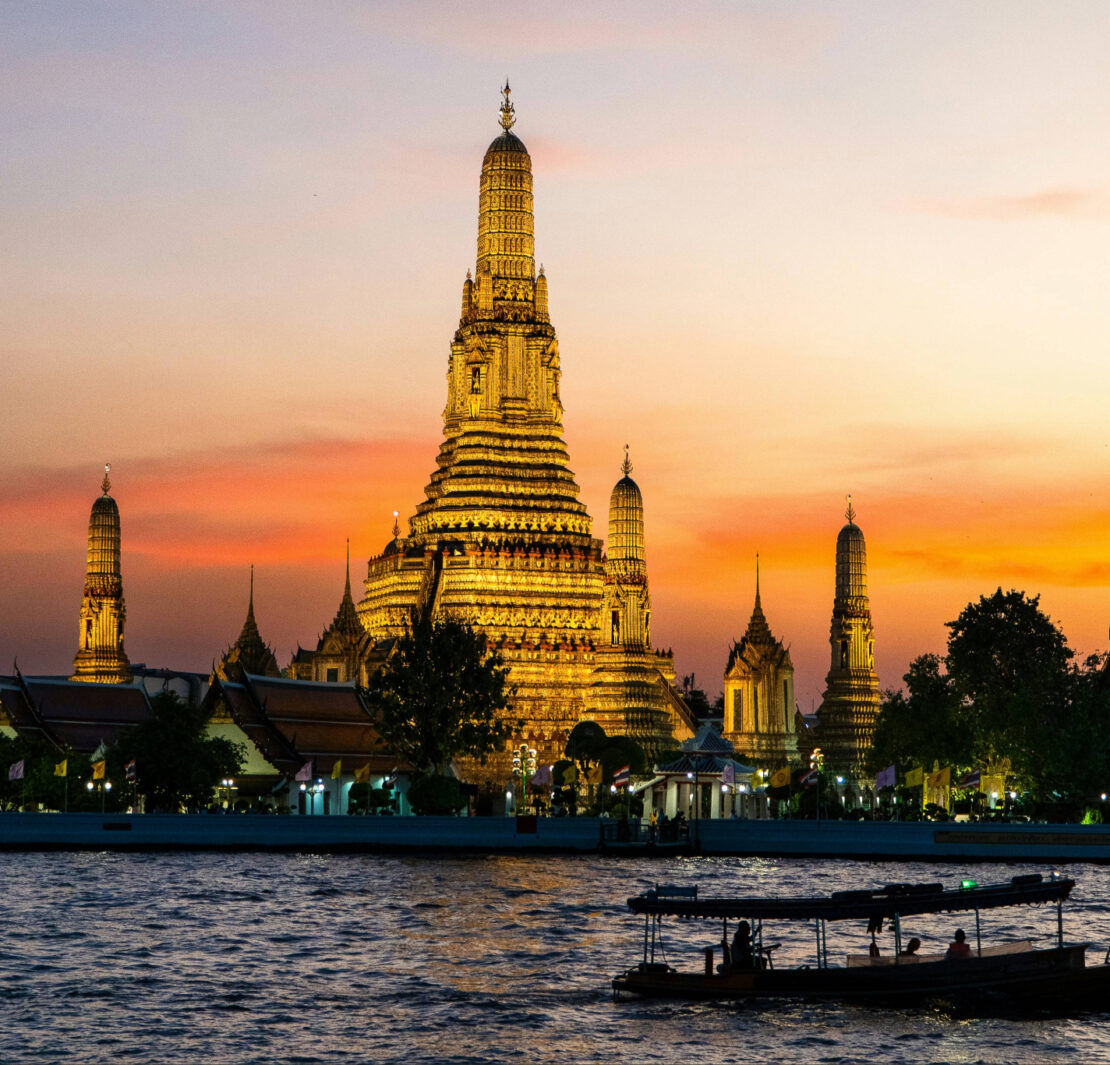
Bangkok doesn’t choose between luxury and chaos. It holds both, at once, on the same block, and refuses to apologize for either. This is a city where a Rolls-Royce showroom and a noodle cart can exist within sight of each other, where a tasting menu and a plastic stool both feel like the right decision depending on the hour. Most cities pick a lane: polished or raw, aspirational or authentic. Bangkok simply doesn’t, and that is precisely what makes it magnetic. Spend a few days moving between its glass-fronted malls and its smoke-filled sidewalks, and you start to understand that the contrast isn’t a flaw in the city’s identity. It is the identity.
Temples to Consumption
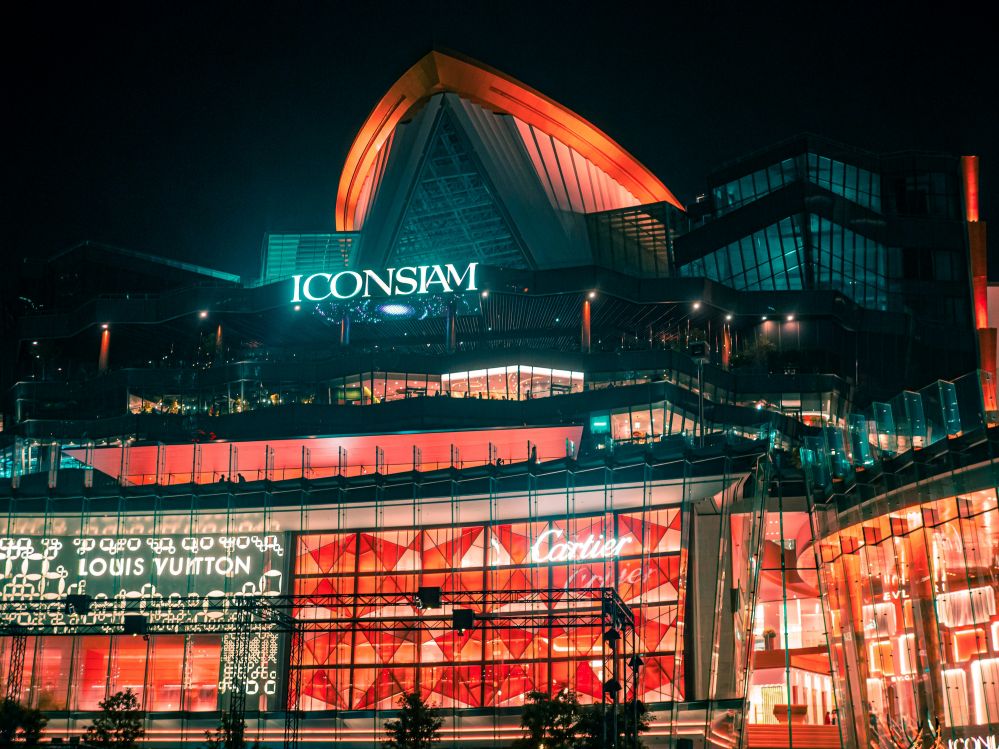
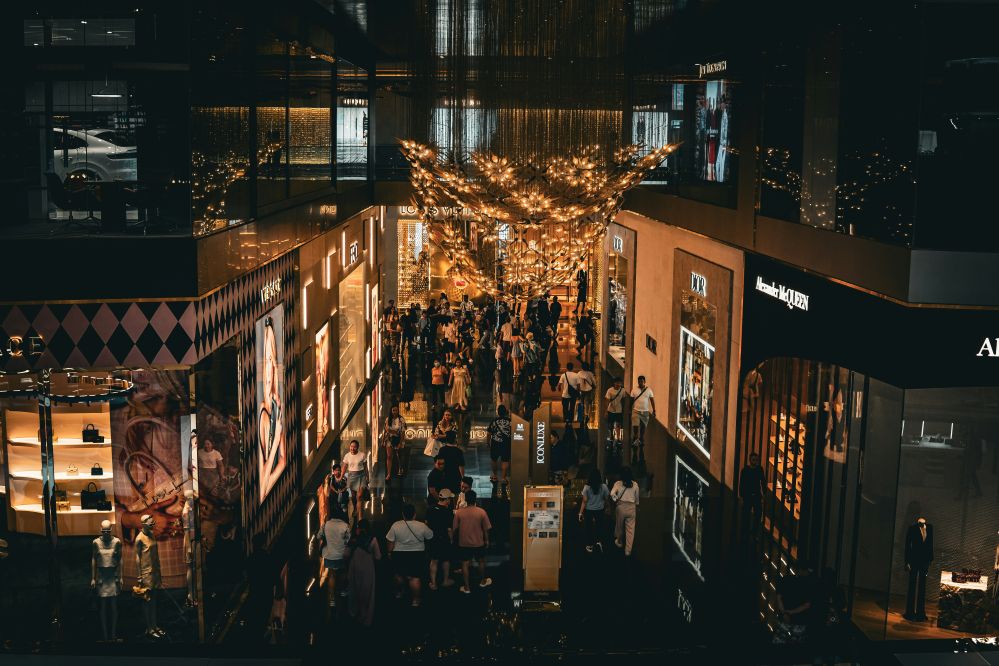
The city’s malls are not retail; they’re spectacle. IconSiam, Siam Paragon, and Central Embassy set the standard years ago; One Bangkok and The Emsphere are now rewriting it.
One Bangkok is less a mall than a manifesto: one of the largest private developments in Thai history, folding boutiques, fine dining, art, and hotels into a single ecosystem built on the promise of sustainability alongside spectacle.
The Emsphere, the newest addition to the Emporium district, trades restraint for architecture that photographs like a film set: open, futuristic, unapologetically maximal. Designer boutiques sit beside immersive entertainment and dining built for the city’s most discerning crowd.
Then there are the showrooms. Rolls-Royce, Lamborghini, Maserati, all parked inside shopping centres like museum pieces. It’s the kind of detail that tells you exactly what register this city is operating in.
Eating Your Way Through
The food halls inside these complexes are destinations in their own right. IconSiam’s floating market reimagines Thailand’s culinary geography under one roof: grilled seafood beside fragrant curries, street tradition dressed in mall polish.
Here, the line between casual and fine dining dissolves. A plate of pad thai, cooked to order in front of you, sits a few steps from lobster thermidor. Neither feels like a compromise.
Two Cities, One Block
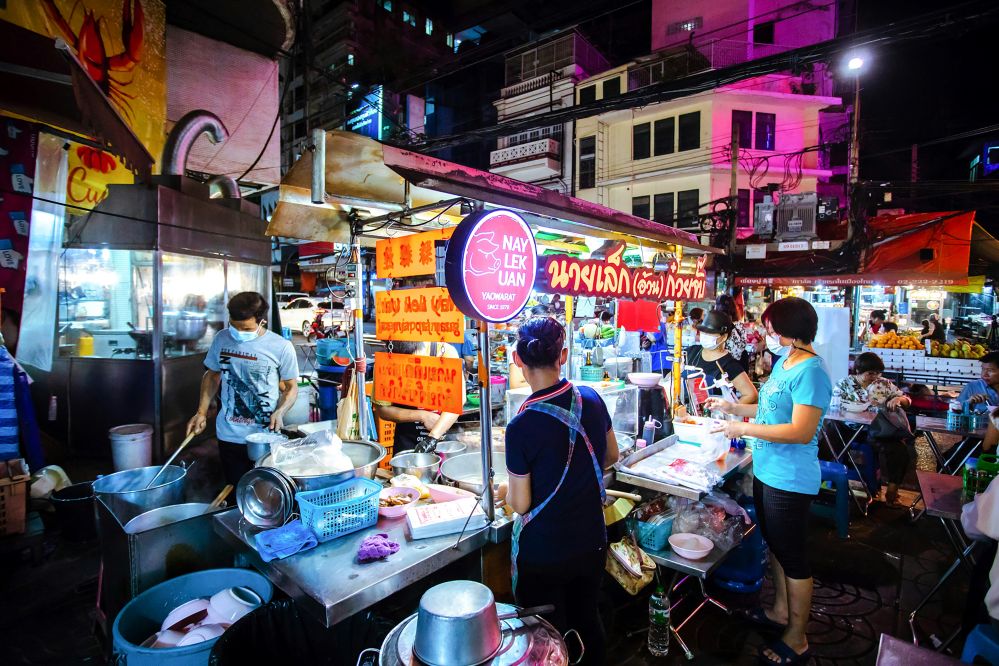
Walk out of any of these malls and the city changes register instantly. Sidewalk vendors grill skewered meat over open flame. Noodle soup steams from carts. Durian announces itself before you see it. Locals eat on plastic stools, dinner assembled a few feet away.
This is Bangkok’s real trick: not that luxury and street life exist in the same city, but that they exist on the same street, without apology or friction. The wealth gap here is visible in a way few cities allow. And yet, nothing here reads as discord. It reads as rhythm.
Michelin, Meet the Street Cart
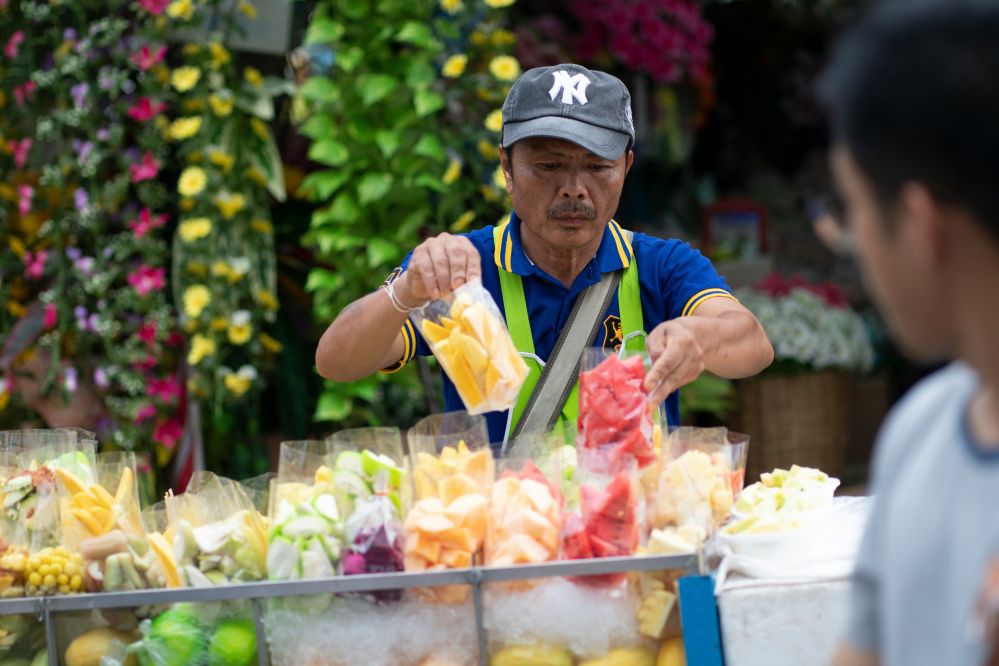
Bangkok’s fine dining scene is genuinely world-class: inventive, confident, unafraid to reinterpret Thai tradition on its own terms. But ask anyone who’s spent real time here, and they’ll tell you the street stalls are where the city’s soul actually lives.
Satay smoke, wok-charred noodles, lime cut fresh into everything. This is the flavour memory that outlasts the tasting menu. More than once, a dish eaten standing up, off a plastic plate, outclassed something plated tableside at a Michelin address.
A City That Inspires
Bangkok’s malls are architectural feats: glass, ambition, and genuine design intelligence. But it’s the friction between that world and the one on the pavement that gives the city its pulse. This isn’t a city performing luxury for visitors; it’s a city that contains multitudes and lets you see all of them at once. That’s the real appeal. Not the polish alone, or the grit alone, but the fact that neither cancels the other out.
Bangkok doesn’t resolve its contradictions, and that’s exactly the point.
Foto in header: Vasant Jain



