

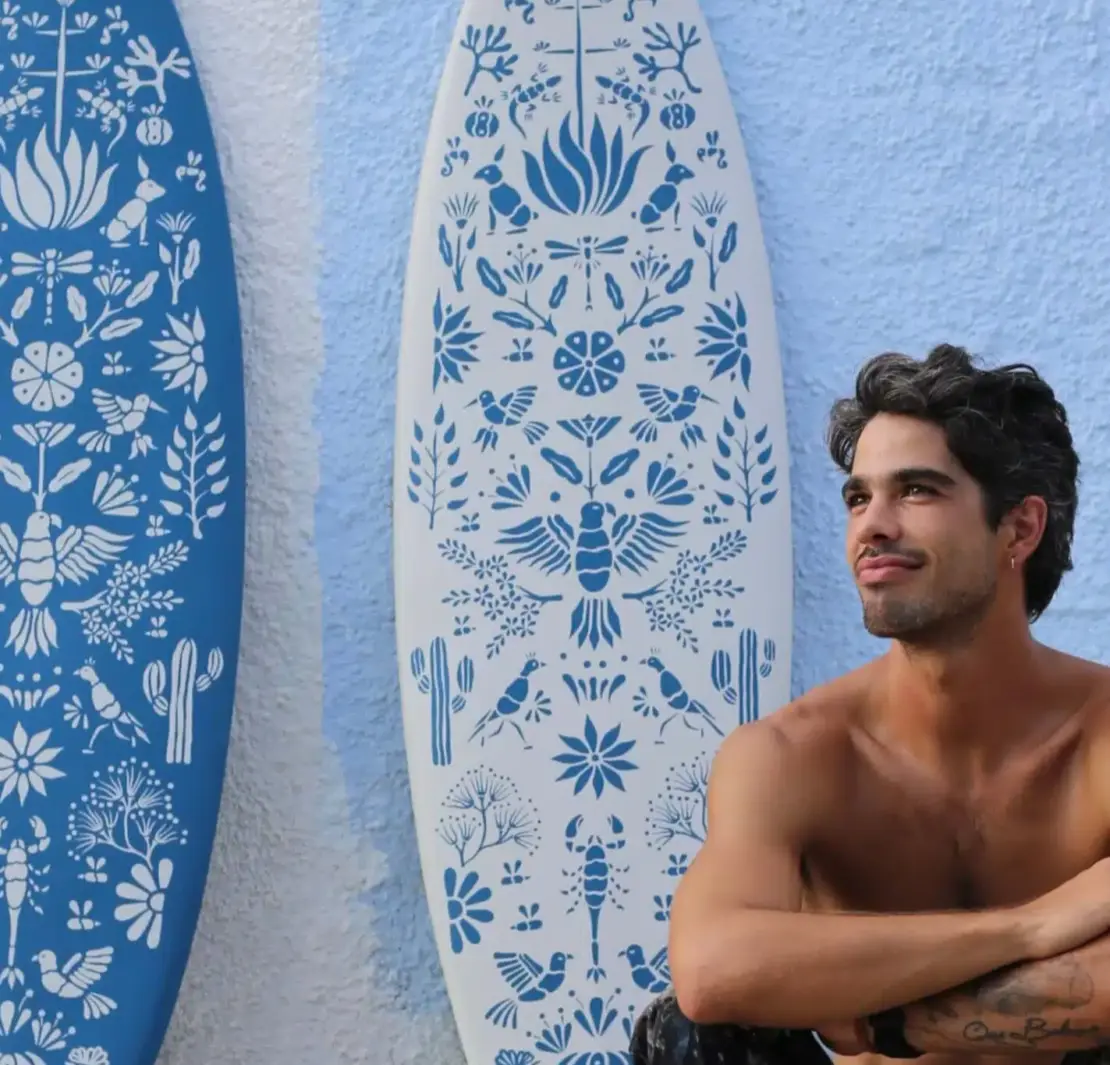
There’s a particular kind of artist who doesn’t need a white cube to make work that matters. Rodrigo Azanza is one of them. Based in Baja California Sur, he paints on surfboards that are past their functional life, that the ocean has already retired, cracked, and waterlogged, and transforms them into something with an entirely different kind of currency. The premise sounds simple. The execution is not.
Rodrigo Azanza: Art from Broken Boards
Reimagining Boards in the Heart of Surf Country
Azanza works as a painter, muralist, illustrator, and designer, and has added “artivist” to that list with enough conviction that it doesn’t read as branding. His practice is built around a straightforward belief: that art should do something, to a space, to the people inside it, to the ecosystem surrounding it. In Baja California Sur, one of Mexico’s most ecologically loaded states, that’s not an abstract position. It’s a daily one.
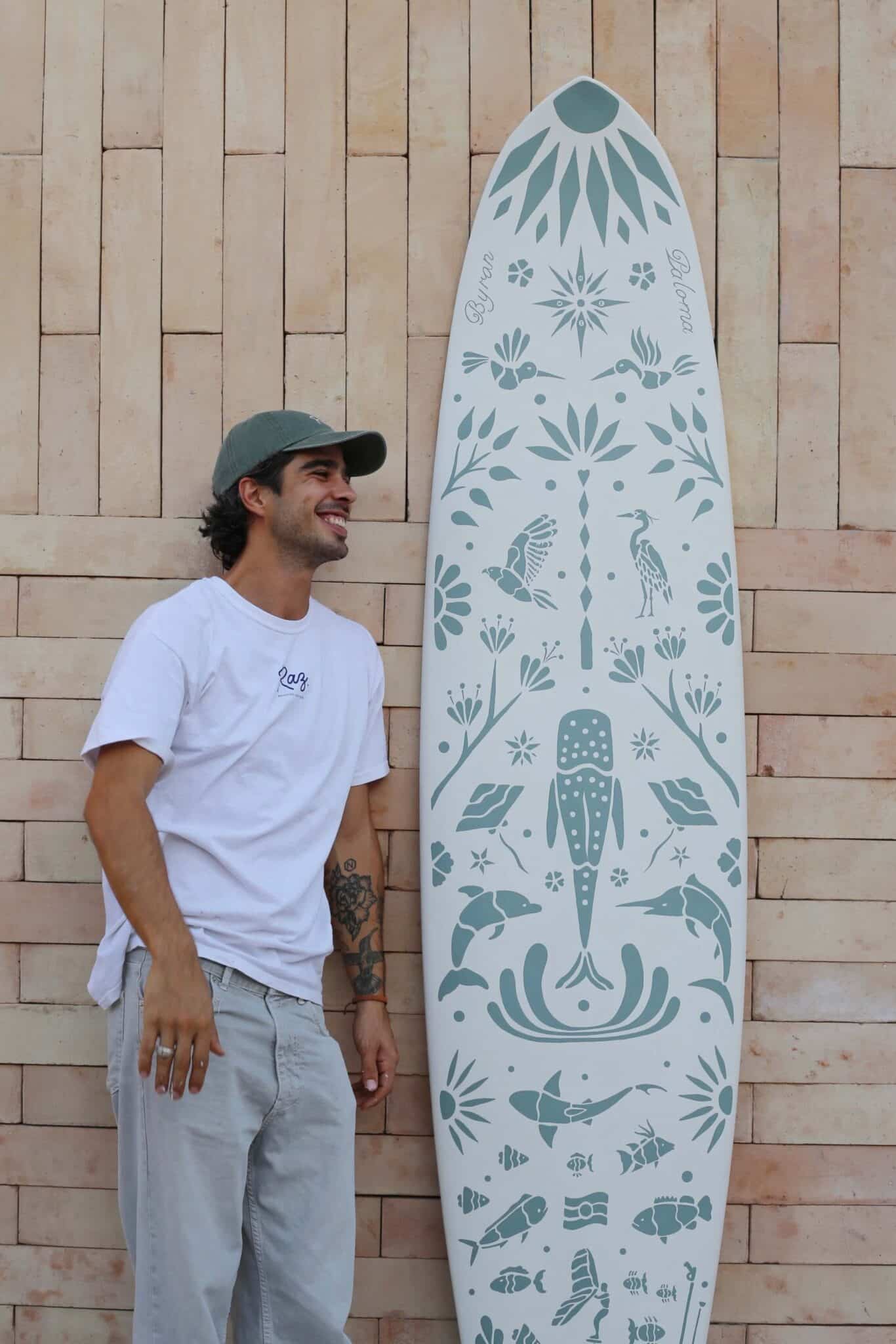
The surfboards came out of proximity and logic. Baja is surf country, and boards get written off regularly, too damaged to ride, too present to ignore. Azanza intervenes them individually, painting directly onto each surface, treating the shape and history of the board as part of the brief. No two are the same because no two boards are the same. The process doesn’t allow for repetition, even if he wanted it.
Marine Life, Translated Into Graphic Creations
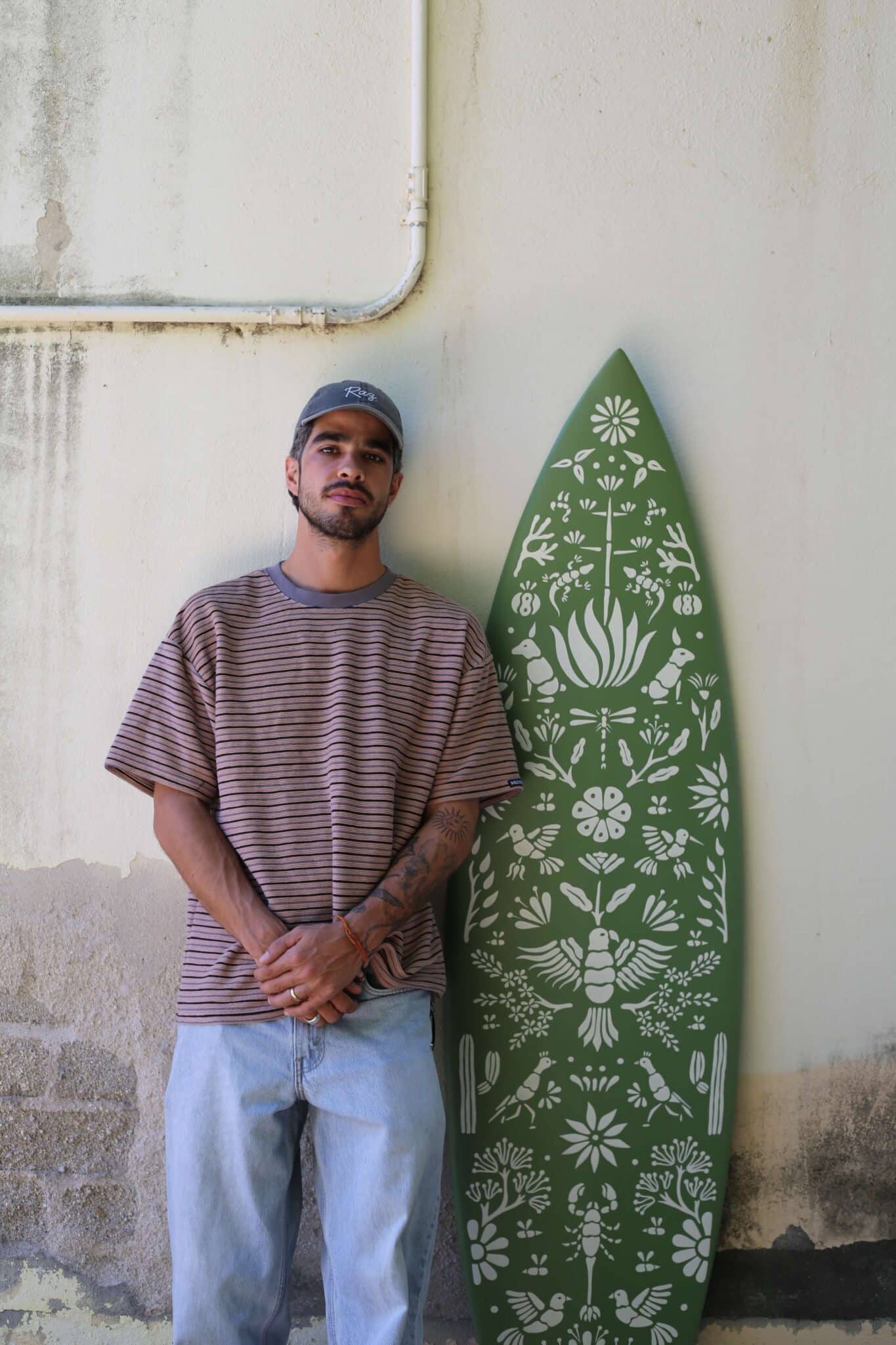
What ends up on them draws from Mexican folk art as a primary inspiration: vibrant, symbolic, rooted in a visual tradition that runs deep through indigenous and mestizo culture. Flora and fauna from the Baja peninsula appear with real specificity, the kinds of creatures and plants Azanza has been paying attention to since childhood. But he moves between surrealism and realism when the work calls for it, without announcing the shift. The result is a visual language that feels accumulated rather than constructed, built up over years rather than arrived at as a concept.
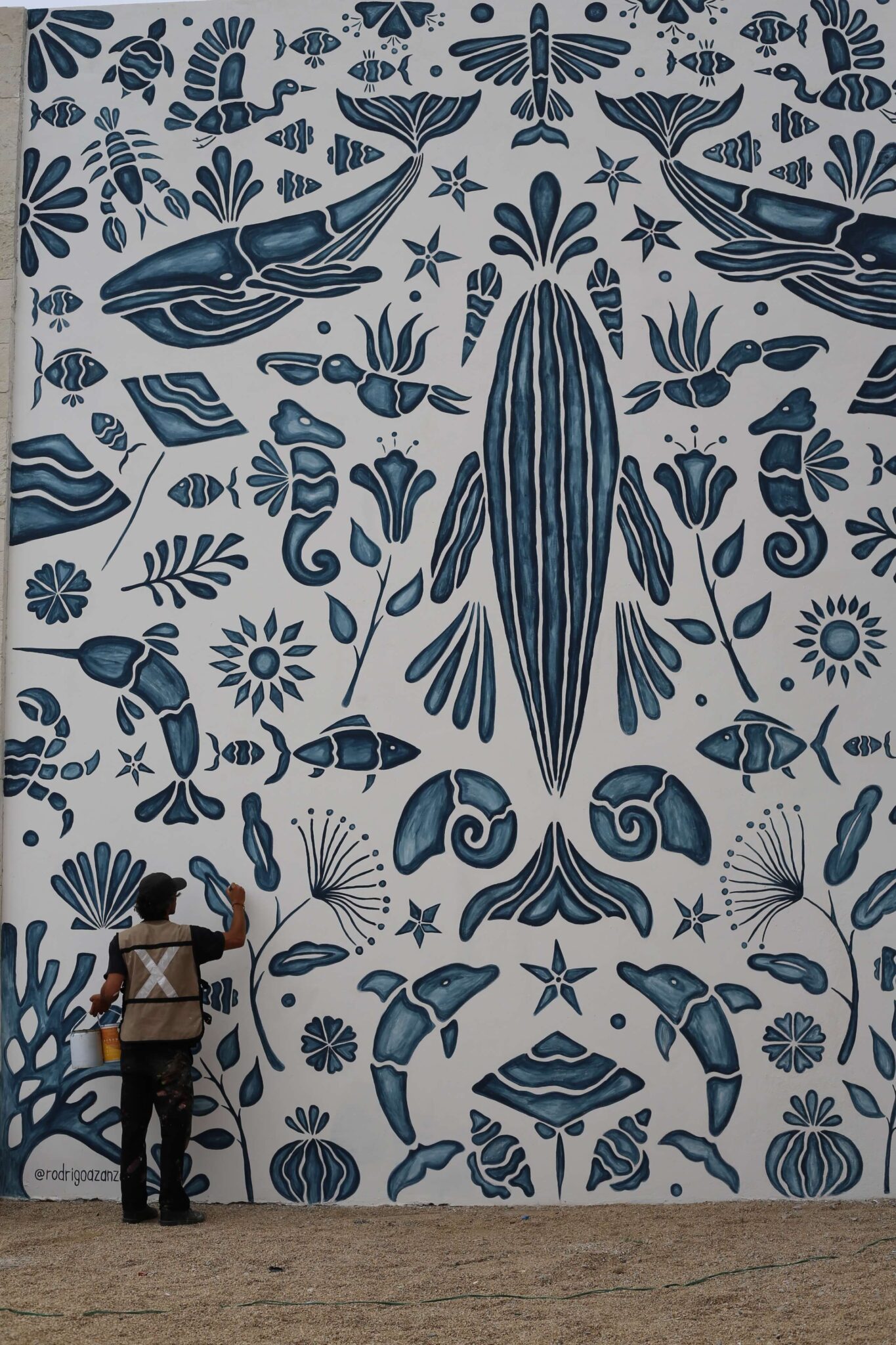
The environmental thread isn’t decorative. Baja California Sur sits alongside one of the most biodiverse marine environments on the planet, and Azanza has watched the pressure on it build over time. Taking discarded objects and refusing to let them become waste is part of the same logic as painting the heron or the whale or the desert cactus: an insistence that these things are worth attending to. The work makes that argument without stating it.
Transforming Spaces With Cultural Art
The murals operate at a different scale but follow identical principles. Azanza works in public and private spaces across the region, and the aim is always transformation rather than decoration. There’s a real distinction between the two. Decoration sits on top of a space. Transformation changes what it feels like to be inside one. That requires knowing where you are, reading a community, understanding what a wall actually needs before you touch it.
There is a confidence in work that comes from somewhere specific. A lot of contemporary art moves easily between contexts precisely because it isn’t tied to any of them, and that mobility is sometimes mistaken for depth. Azanza’s work doesn’t travel that way. It is rooted in Baja California Sur, in Mexico, in a coastline and a desert and a particular quality of light. That specificity is precisely why it connects with people who have never been within two thousand miles of it. Particularity, done well, communicates further than generality ever does.
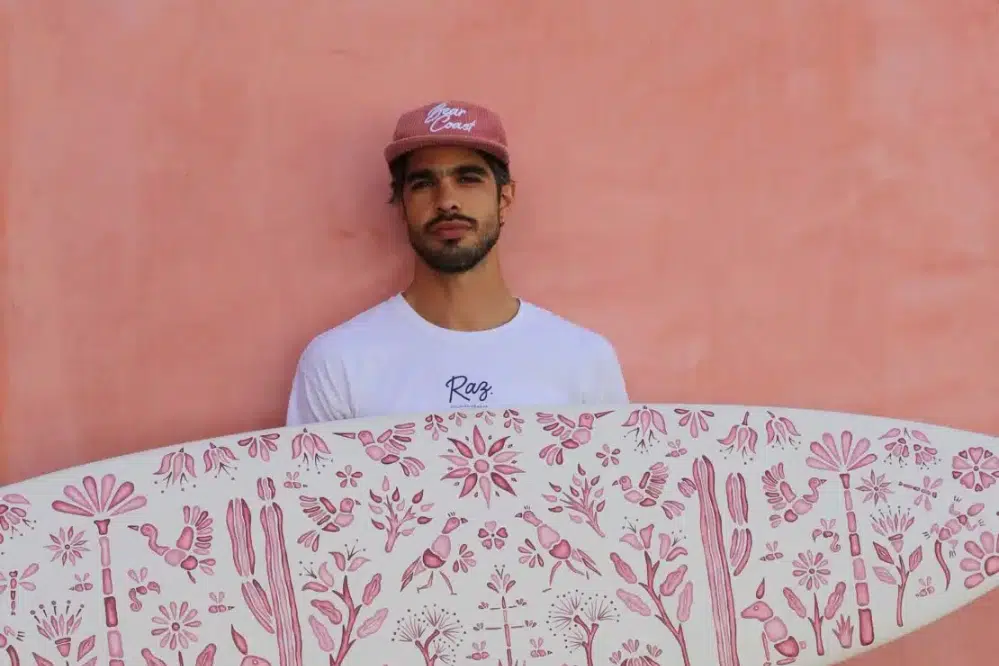
Rodrigo Azanza, an Artist Worth Watching
The surfboards are a good way in if you’re approaching his work for the first time. They carry two histories simultaneously: the physical one of the board itself, shaped for water, worn down by it, and the painted one that Azanza adds on top. Following a line of folk-art brushwork across a fin or a rail, you’re aware of both. The object holds its past. The painting redirects its future.
What holds the practice together across murals, boards, illustration, and design is a coherent set of beliefs rather than a specific visual style. Folk art is the foundation, but surrealism and realism are tools he reaches for without anxiety when the work demands them. The range doesn’t feel like restlessness. It feels like someone who knows exactly what they’re doing and is interested in how far they can take it.
His work continues to expand in scale, most recently as an artist residing at Las Ventanas al Paraso, where he painted an original mural inside La Cava wine cellar. He used earth pigments pulled straight from the Baja desert and ancestral fresco techniques. No shortcuts.
Worth watching, and worth hanging on a wall. The ocean gave these boards a life. Azanza gives them a reason.
Follow Rodrigo’s work at rodrigoazanza.com or @rodrigoazanza on Instagram.
Foto in header: Rodrigo Azanza



