


There is a particular kind of hotel that stops feeling like a hotel almost immediately. Jnane Rumi, a Marrakech boutique hotel tucked into the ancient palm groves of the Palmeraie just ten minutes from the Medina, is that kind of place, and it has arrived fully formed.
Marrakech has always known how to seduce. The souks, the light, the smell of orange blossom and cumin, the way the city shifts between sensory overwhelm and unexpected stillness … it is one of the world’s great destinations precisely because it asks so much of you. Jnane Rumi, located in the Palmeraie, a thousand-year-old palm grove to the north of the city, offers the perfect counterpoint: a lush, quietly extraordinary residence where the outside world fades slowly and the pace of things becomes entirely your own.
Jnane Rumi: A Marrakech Boutique Hotel Built Around Beauty
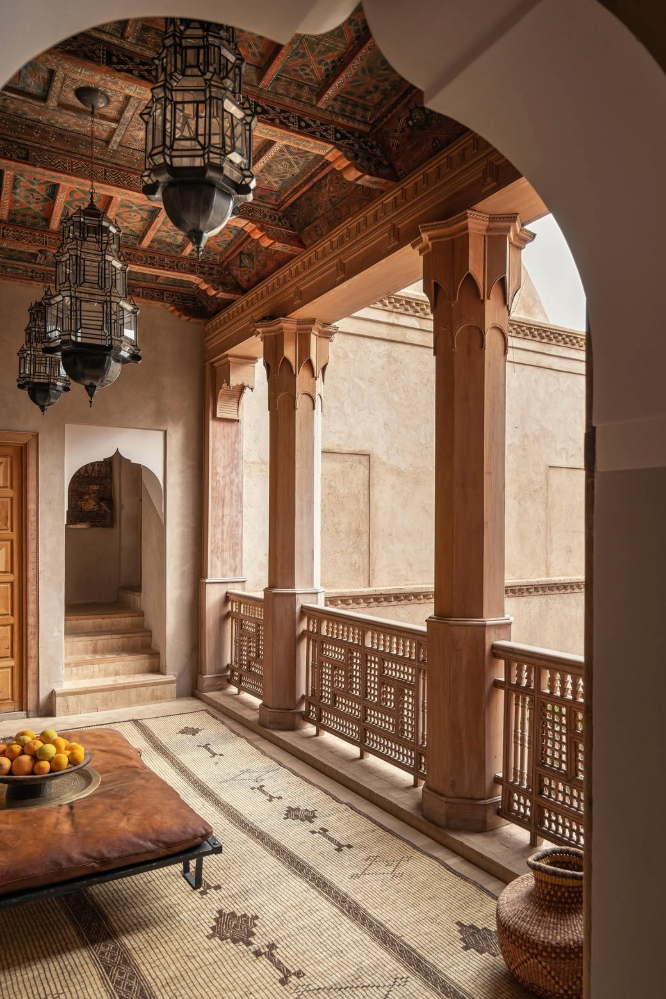
Jnane Rumi’s latest renovation pays homage to Charles Boccara’s delicate compositions, preserving and celebrating his architectural mastery. Boccara, the Tunisian-born architect whose work defined the aesthetic language of Marrakech’s most beautiful buildings across four decades, left an imprint here that the renovation has chosen to honour rather than update. The result is a residence that feels timeless in the truest sense.
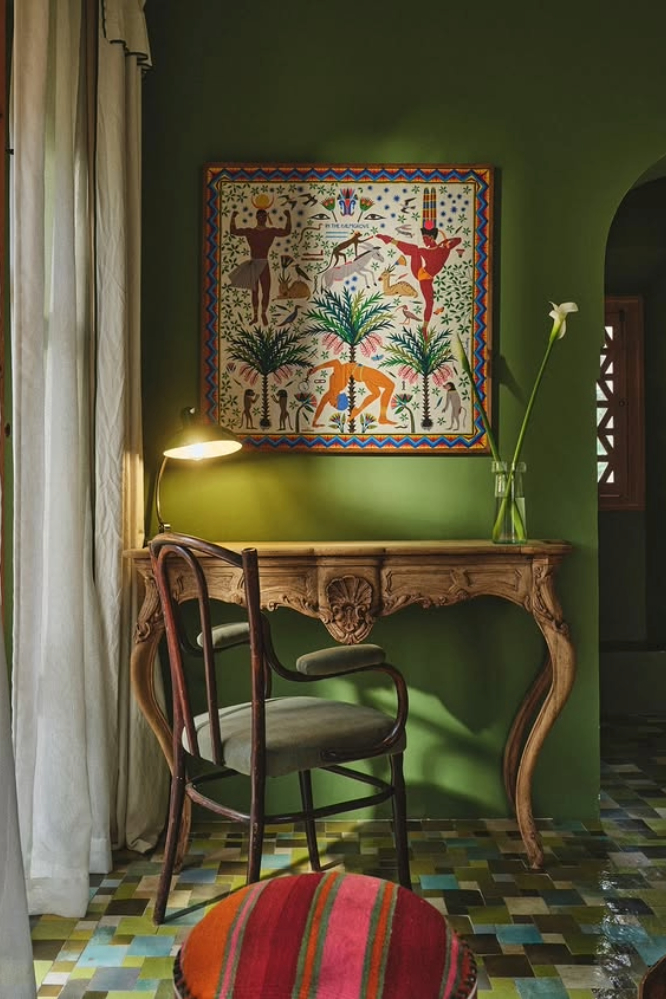
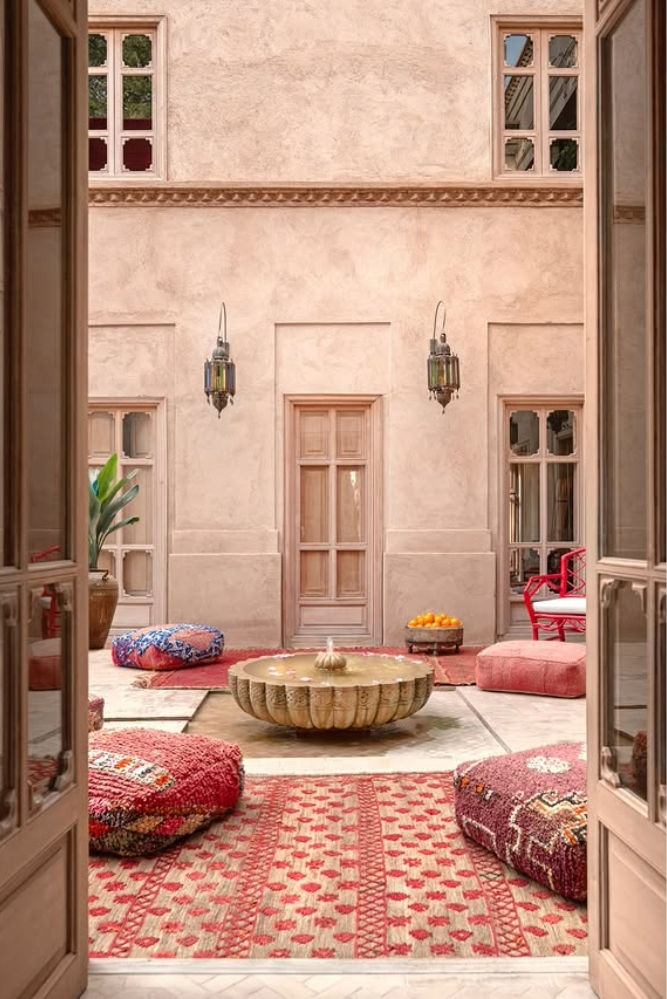
Every space is thoughtfully adorned with a blend of local arts and crafts, vintage treasures, and contemporary design. From intricate details to bold architectural statements, each corner tells a story. Standout features include a breathtaking nine-metre-high domed ceiling in the bathroom. It is the kind of detail that stops you mid-thought, and there are many such details here, each one discovered at its own pace.
The Gardens and the Pool
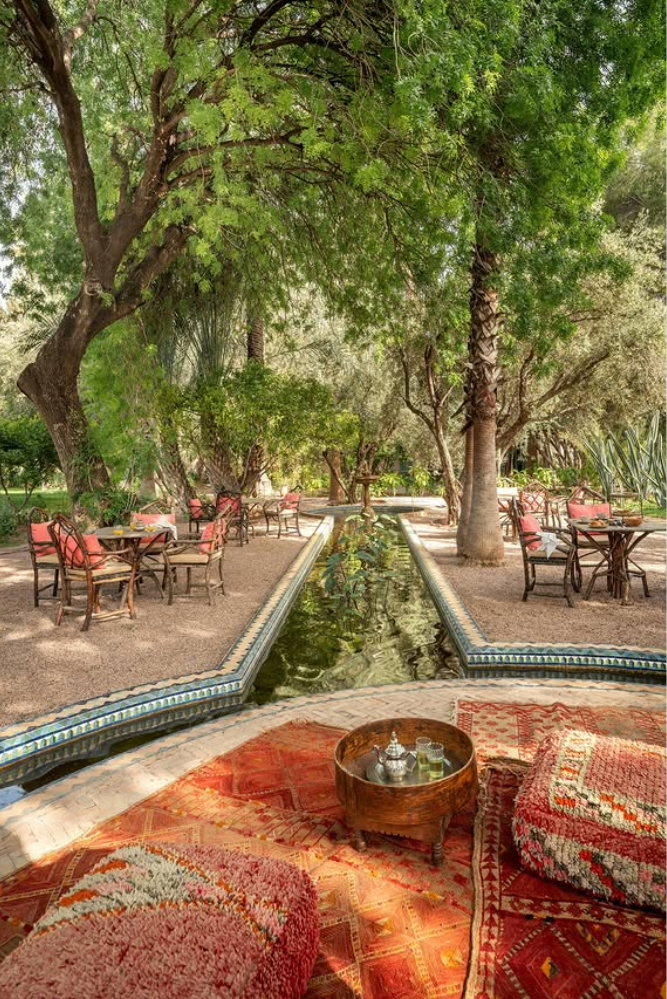
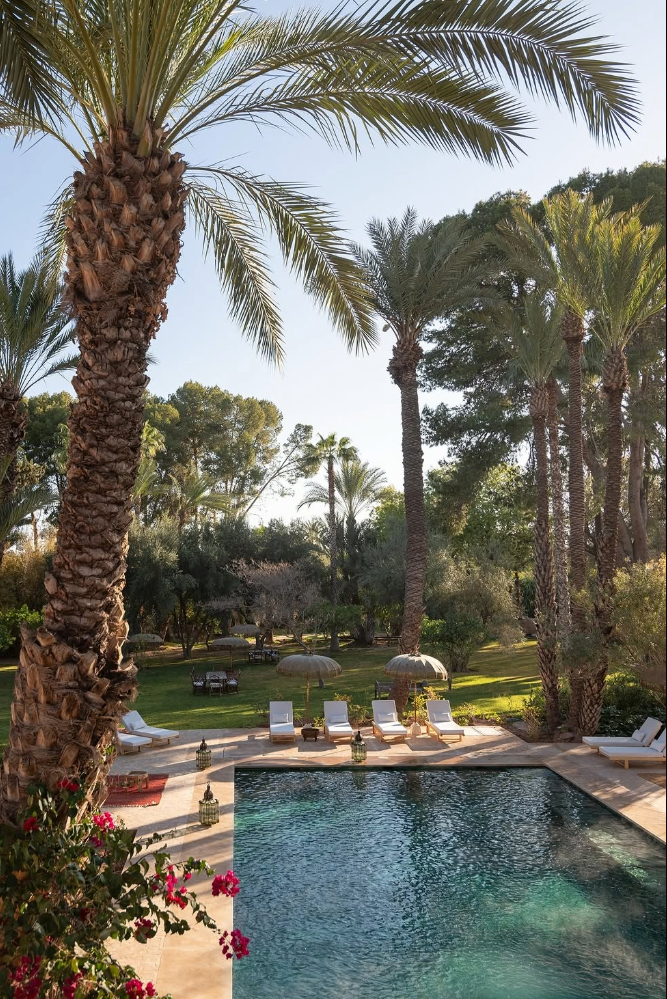
The main house features seven en suite bedrooms, most with private terraces or balconies. Guests can enjoy a full-length 13×6-metre swimming pool, century-old gardens with over 150 palm trees, and lush endemic vegetation. The gardens are the heart of Jnane Rumi, the space around which everything else is organised. Wandering through them in the early morning or the last light of the afternoon, with the scent of rosemary and orange drifting in from the bar terrace, is its own particular kind of luxury. For those seeking ultimate privacy, Jnane Rumi offers a separate annex with a salon, enclosed garden, private pool, and terraces, along with three smaller pavilions.
Art as Architecture
More than a house, Jnane Rumi is a place for connection through art and culture. Within and around the residence, guests discover an impressive collection of contemporary North African and European art, curated by Moroccan artist Samy Snoussi. The collection features frescoes by Roberto Ruspoli, along with works by artists such as Mous Lamrabat, Mo Baala, Amina Rezki, M’barek Bouhchichi, Louis Barthélemy, and Amina Agueznay. This is not a hotel that has placed a few artworks in the corridors to signal cultural ambition. The collection is structural: it shapes the atmosphere of the whole residence, and it rewards the kind of slow, attentive looking that Jnane Rumi quietly encourages in everyone who stays.
The Table
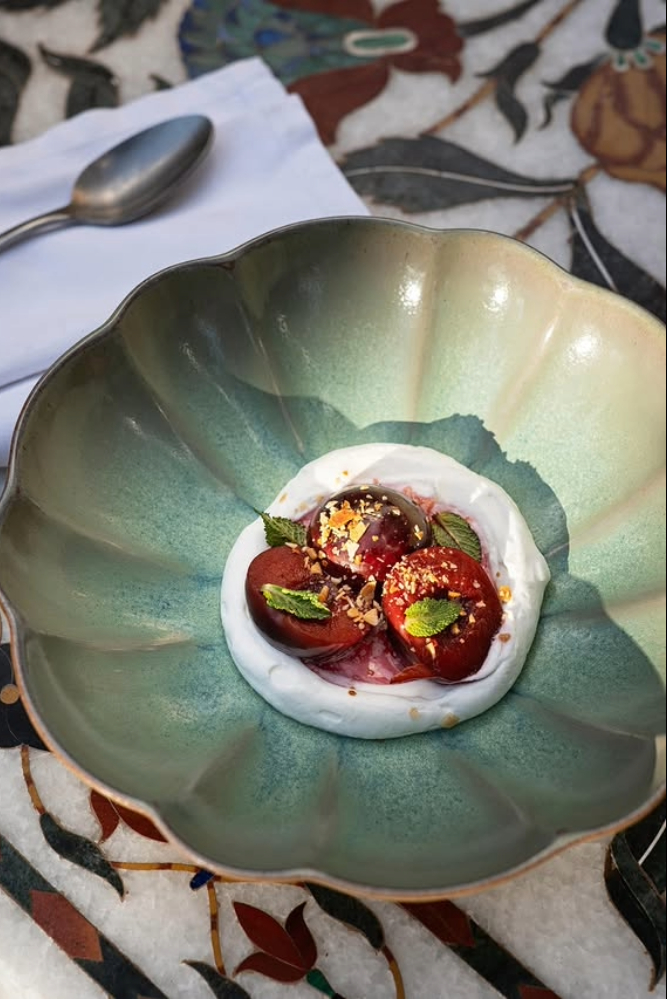
Creative chef Karin Gaasterland brings together local and Western traditions in menus that are fresh, inventive, and quietly surprising. Meals can be taken at leisure throughout the garden, in privacy on the upper terraces, or alongside fellow guests in the dining room. Evenings tend to begin at the Rumi Bar, where panoramic garden views and the scent of fig, olive, rosemary, and lemon thyme make it easy to stay long past any original intention.
The Shape of a Place Well Lived
More at jnanerumi.com and on Instagram at @jnanerumi.
Foto in header: Jnane Rumi



